


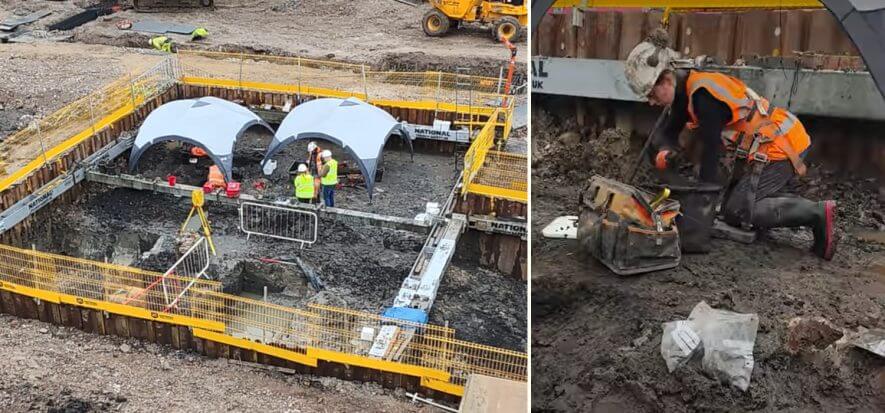
A potential leather-processing workshop dating back around 500 years has been discovered in Grimsby, England. During archaeological excavations, fragments of leather, ceramics, and fish bones have emerged. Experts link them to a leather workshop that once operated in the heart of the city. The bones could be the remains of the artisans’ meals.
The ancient leather workshop
During restructuring works at Freshney Place for flood prevention (in photo), York Archaeology found leather artifacts, ceramics, and fish bones two to three meters below sea level. The excavations took place from October 2025 until early February 2026. According to experts, these are objects from a leather-processing workshop active more than 500 years ago. The city of Grimsby, at the mouth of the River Humber on the North Sea, developed in the 12th century around port activities, and it’s believed that the excavation area corresponds to the “probable ground level” between 1450 and 1600.
The hypotheses
Louise Jennings, head of the city’s historic and cultural heritage, told Grimsby News: “At first glance, it appears that this may have been a leather-working area. One could imagine that this workshop made leather aprons or shoes, for example. And being so close to the sea, we can imagine the people working in the workshop eating fish for lunch”. Phil Moore, archaeological consultant at BWB Consulting (which coordinated the works), told the BBC that the damp nature of the site could lead to the discovery of organic materials such as wood and leather.
Read also:
- Perugia, the medieval tannery of Porta Pesa rediscovered by chance
- EUR 1.5 million to study leather tanning in the Roman Empire
- Seven centuries of mystery: an antique shoe found in a bearded vulture nest